Posts

Showing posts with the label #supplychain #logistics #freightforwarding #gazisanaulhasan

Demand variability: 4 action steps to take in a time of crisis

Image
 Demand variability: 4 actions steps to take in a time of crisis 1. Maintain transparent, proactive relationships with your suppliers. Ensure your key suppliers have full visibility in your projected demand, preferably in real-time, to secure inventory for building safety stocks. Having good visibility of both demand and supply enables an organization to manage demand signals more accurately, respond to customer requests faster, and smooth the effects of demand variation. 2. Activate alternate sources of supply If you have multi-sourced key inputs, move quickly to activate secondary supplier relationships and secure additional critical inventory and capacity. Explore potential opportunities to establish shared resource pools for  raw materials  inventory. 3. Reduce lead times Long lead times increase the probability of a bullwhip effect, so find ways to reduce lead time from sources of supply. It also allows you to react quickly to changing demand. 4. Update inventor...

The 48 keywords for Supply Chain Professional's

Image
Keywords are key to having your resume noticed! With the increasing prevalence of scanning technology, employing keywords in a resume to attract maximum attention by a human and/or computer scanner  has become a critical component of building an attention getting resume. Keywords are the terms deemed by the employer to represent the essential job attributes. Each industry and profession has specific keywords. Companies and recruiters are searching resumes for specific keywords and key phrases to find the candidates with the skills, qualifications and expertise to fulfill the job requirements. Incorporating keywords into a resume and cover letter help you to secure optimum attention and outperform your competition. The top 48 keywords in Supply Chain / Logistics are: Asset Management Capital Budget Change Management Continuous Improvement Contract Negotiations Cost Reduction Customer Service Customs Compliance Demand Planning Distribution Management Facility Management FAR / DAR Fl...

3 Inventory Management Techniques

Image
When businesses don’t have a handle on the activity of their inventory, or worse, track it with outdated spreadsheets and data entry, the rest of the pieces, like order fulfilment, don’t fall into place. When you don’t know how much inventory you have on hand, you can’t make smart reorder decisions. 3 Inventory Management Techniques Safety stock inventory Safety stock inventory management is extra inventory being ordered beyond expected demand. This technique is used to prevent stock outs typically caused by incorrect forecasting or unforeseen changes in customer demand. FIFO and LIFO LIFO and FIFO are methods to determine the cost of inventory. FIFO, or First in, First out, assumes the older inventory is sold first. FIFO is a great way to keep inventory fresh.LIFO, or Last-in, First-out, assumes the newer inventory is typically sold first. LIFO helps prevent inventory from going bad. Just-in-time inventory management Just-in-time (JIT) inventory management is a technique that arrange...

5 KEY SUPPLY CHAIN MODELS AND METHODS THAT ARE USED TO ANALYZE SUPPLY CHAINS

Image
  5 KEY SUPPLY CHAIN MODELS AND METHODS 1. DESCRIPTIVE ANALYTICS This is the best type of supply chain management analysis that you can use to check out the past performance of the supply chain. It will tell you what has happened, so you can check if the results are matching with your plans and objectives. This method uses data mining to gather raw information from the supply chain. Summarizing it and presenting it in a compact form will allow you to get a clear image of the desired period in the past. 2. PREDICTIVE ANALYTICS If you want to see what might happen in the future, this is the method you should use. As the name suggests, predictive analytics will form potential scenarios that may take place in a month, two, a year from now. Although it is never guaranteed that they will happen exactly as predictive by this method. Even so, you will know what to expect, in a significant proportion, so you can adjust your plans accordingly. 3. PRESCRIPTIVE ANALYTICS In case you want to se...

What is ASYCUDA?

Image
ASYCUDA is a computerized customs management system which covers most foreign trade procedures. The system handles manifests and customs declarations, accounting procedures, transit and suspense procedures.  It generates trade data that can be used for statistical economic analysis. The ASYCUDA software is developed in Geneva by UNCTAD. ASYCUDA takes into account the international codes and standards developed by ISO (International Organisation for Standardisation), WCO (World Customs Organization), eg. Data Model, and the United Nations.  It can be configured to suit the national characteristics of individual Customs regimes, National Tariff & legislation. ASYCUDA provides Electronic Data Interchange (EDI) between traders and Customs using prevailing standards such as XML. There are three generations of ASYCUDA in use: ASYCUDA version 2.7, ASYCUDA++, and ASYCUDA World. -Gazi Sanaul Hasan 

Lean Supply Chain

Image
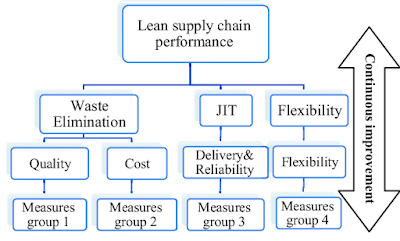
While the standards of typical supply chain management are known to most business owners, a new wave of lean supply chain management is becoming more popular for a variety of reasons . LEAN SUPPLY CHAIN DEFINITION Understanding lean supply chain definition starts with what effective supply chain management hopes to accomplish. In general, what is lean supply chain starts with operating on the same principles of efficiency, but emphasizes overall quality. This means a reduction of defective goods to zero, lowering waste, and increasing efficiency as a result. The idea behind lean supply chain management is to emphasize a lower number of returns by customers so that every product that is sold is kept. By reducing quality control issues and having to handle customers with their returns, lean supply chain management reduces overall expenses. CHARACTERISTICS OF LEAN SUPPLY CHAIN The characteristics of lean supply chain management start with the products themselves. An examination of why de...

Hey I Need the LR Copy!

Image
Hey I Need the LR Copy! The most common question for supply chain professionals. The sharing is for the folks who are newer in this area. LR- Lorry Receipt (LR) or Goods Receipt(GR)   LR number represents a receipt which is known as Lorry Receipt (LR) or Goods Receipt(GR) in case of goods transport by road which is handed over to a transporting agency or carrier.The other receipt term depends on transportation facilities By rail/train- RR: Railways Receipt By sea- BL: Bill of lading By air- AWL: Air Way Bill LR also called “Bilti” in Hindi.his receipt is either in 3 copies or 5 copies i.e. Consignee copy, Driver Copy, Consigner Copy, and File Copy. This receipt is made by the Transporter once the material is loaded on the vehicle for Delivery. The best example is: 1. Let assume my self as a battery maker. I am the manufacturer, I want to send my goods to various parts of states/districts within the country. I want to approach a proper lorry owner/association to transport my goods. ...

The 80/20 Rule

Image
How to Reduce Safety Stock Using the 80/20 Rule The 80/20 rule is often used in parts inventory management to identify the 20% of inventory that produces 80% of the profits.A variant of this rule, called ABC analysis, is commonly used to split inventory into three parts according to their profitability. This allows the organization to focus efforts and money on the inventory items that count the most. While this is a good way to put the 80/20 rule to use, there are other equally useful applications of this powerful principle. Suppose the organization already used the 80/20 rule to identify the most profitable inventory items and have eliminated or reduced the least profitable ones. While this is a significant improvement in cutting down inventory costs, company can go further by applying the 80/20 rule to your safety stock. So how can we use the 80/20 rule to minimize uncertainties?  Let’s look at supplier unreliability. Unreliable suppliers are the suppliers w...
Image
Warehouse Vs. Warehousing  Warehouse is a warehouse is a commercial building that’s used to store goods, they’re mainly used by manufacturers, importers, exporters, wholesalers, and transport businesses, to name a few. Warehouses are used for storage, and storage only. They’re usually large plain buildings in industrial areas. They have loading docks to load and unload goods, but that’s usually the extent of the activity that goes on in a warehouse. They can be designed to receive goods directly from railways, airports, or seaports, and are usually equipped with cranes and forklifts for moving and organizing goods. Some warehouses are temperature controlled, making them well-suited for storing groceries, other perishables, and other materials including raw materials, packing foods, spare parts, and more. While warehouses can be useful to some, not all retailers use them since they’re better suited for those searching for a more long-term storage option. A warehou...

The Best books of Supply Chain Management & Logistics

Image
Supply Chain Management strategy planning and operation"  by "Sunil Chopra, Peter Meindl, and D.V. Kalra". In NITIE (the mecca of supply chain) this book is considered as Bible of supply chain and really helps to understand the concept of the supply chain, strategy framework, planning and operational decisions within Supply chain.   Best books of Supply Chain Management & Logistics Essentials of Supply Chain Management by Michael H. Hugos Logistics and Supply Chain Management by Martin Christopher Designing and Managing the Supply Chain by David Simchi-Levi, Philip Kaminsky and Edith Simchi-Levi Purchasing and Supply Chain Management by Robert Monczka, Robert Handfield, Larry Giunipero and James Patterson Logistics Management and Strategy: Competing through the Supply Chainby Alan Harrison and Remko Van Hoek Manufacturing Planning and Control for Supply Chain Management by F. Robert Jacobs, William Berry, D. C...

Cargo Insurance Certificate

Image
What is Cargo Insurance? A document indicating the type and amount of  insurance coverage  in force on a particular  shipment . Used to assure the  consignee  that insurance is provided to cover loss of or damage to the  cargo  while in transit. In some cases a  shipper  may issue a document that certified that a  shipment  has been  insured  under a given open policy, and that the certificate represents and takes the place of such open policy, the provisions of which are controlling.  Because of the objections that an instrument of this kind did not constitute a “policy” within the requirement of letters of credit, it has become the practice to use a  special marine policy . A  special marine policy  makes no difference to an open policy and stands on its own feet as an obligation of the underwriting company. Also called  insurance certificate  and special  cargo  policy. ...

Supply Chain Risk Management

Image
Supply chain risk management (SCRM) is the coordinated efforts of an organization to help identify, monitor, detect and mitigate threats to supply chain  continuity and profitability. Threats to the supply chain include cost volatility, material shortages, supplier financial issues and failures and natural and manmade disasters.  Upstream of an organization are the suppliers who create goods and services used in a company’s own operations. These include raw components or materials that flow into direct manufacturing as raw materials. There are also indirect products and services that facilitate the company’s actual operations. The downstream supply chain efficiently distributes a company’s products or services to its customers. All contracted suppliers, both upstream and downstream, must be proactively managed to minimize financial, confidentiality, operational, reputational and legal risks. Ideally, if the risk is properly managed, nothing occurs that has a...

2 Best Practices for Inventory Management for Warehouses

Image
Inventory management is a complex process, particularly for larger organizations, but the basics are essentially the same regardless of the organization's size or type. In inventory management, goods are delivered to the receiving area of a warehouse in the form of raw materials or components and are put into stock areas or shelves. Compared to larger organizations with more physical space, in smaller companies, the goods may go directly to the stock area instead of a receiving location, and if the business is a wholesale distributor the goods may be finished products rather than raw materials or components. The goods are then pulled from the stock areas and moved to production facilities where they are made into finished goods. The finished goods may be returned to stock areas where they are held prior to shipment, or they may be shipped directly to customers. Track the bestsellers or the high sellers   An advantage of optimizing your inventory management for warehouses is ...

How to Calculate Safety Stock?

Image
How to Calculate Safety Stock ? Safety stock, or buffer stock, is a term that is used to describe the amount of inventory or stock beyond pending orders or average demand that should be kept on hand to reduce the chance of a temporary shortfall of materials, or stockout. Stockout can lead to lost sales and lost customers. Safety stock is helpful in dealing with sudden upswings in demand or for making sure there are enough raw materials and supplies on hand to keep production going while waiting for the next scheduled delivery of materials from a supplier. Method 1: Determining Safety Stock from Demand Look to historic demand and demand variability to determine how to avoid stockouts. The following calculations will predict the stock necessary to achieve a certain cycle service level - i.e. the percentage of supply cycles that will result in a stockout. Method 2: Determine average demand Average demand is the total quantity of a material or good required each day over a fixed ...

Retail Supply Chain & Industry 4.0

Image
Retail Supply Chain & Industry 4.0 It’s to be expected that retail offer chains within the next ten to fifteen years are going to be hotbeds of disruption. The net and e-commerce have started a revolutionary method that’s gone approach on the far side adding some additional sales and provide the channel for shoppers. In fact, the business of meeting retail demand could be added simply mapped to a matrix than a clearly outlined, end-to-end chain. Retailers and their suppliers should initiate to adapt, which implies rethinking relationships, collaborating in a very important approach, learning to harness the Omni-channel construct, and driving technology development in addition as investing what’s on the market. Retailers ought to think about implementing these 5 initiatives into supply chain: Incentivize with free shipping  Free shipping continues to be the highest driver of e-commerce, with nearly ninety % of customers news that it might build them look additi...

How to open an LC

Image
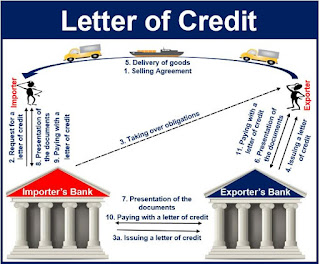
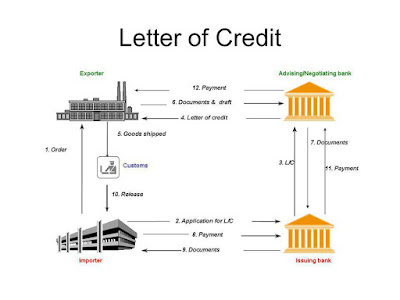
‘How to open an LC’ by buyer “procedures to open a Letter of Credit” You (MR. A) entered into a contract with your overseas supplier to import machinery for production at your factory. As per your contract each other, you (MR. A) need to open a Letter of credit (LC). In this case, Letter of credit is opened by your bank (or other opening banks example: DBBL )  and beneficiary of the letter of credit is your overseas seller of machinery. Letter of credit is a guarantee given by DBBL bank (not you) to your buyer’s bank on account of your buyer. The amount under LC is transferred as per the terms and conditions mentioned in Letter of credit.   Procedures to open a Letter of Credit MR. A can approach DBBL bank to open a Letter of credit. The concerned officer at DBBL bank helps you in filling up the necessary application to open an LC. Since the LC is opened on the basis of your purchase contract, a copy purchase order/export contract has to be produced wit...

Letter of credit and types of LC

Image
Letter of credit A commercial letter of credit or documentary credit maybe defined as an instrument,usually issued by a bank at the request and for the account of its client which indicates that the bank agrees to pay to the named beneficiary a sum of money upon the presentation of certain documents. The use of letter credit for financing export shipments has long been popular with exporters.A l etter of credit is only as good as the bank that issues it and if confirmed the bank that confirms it. Types of Letter of credit   1.Revocable and irrevocable A revocable letter of credit can be changed or cancelled by the bank that issued it at any time and for any reason. An irrevocable letter of credit cannot be changed or cancelled unless everyone involved agrees. Irrevocable letters of credit provide more security than revocable ones. 2.Confirmed and unconfirmed  When the Letter of credit is guaranteed by adding payment confirmation by the advis...

4 important documents in international shipping

Image
Whether you are an importing pro or a newcomer to the industry, there are four documents that will be required in order to get any business done: Bill of Lading, Certificate of Origins, Commercial Invoice, and Packing List. Without the four documents listed above, it is impossible to move goods and receive payment. 1.Bill of Lading 2.Certificate of Origin 3.Commercial Invoice 4.Packing List Bill of lading The bill of lading is a required document to move a freight shipment. The bill of lading (BOL) works as a receipt of freight services, a contract between a freight carrier and shipper and a document of title. The bill of lading is a legally binding document providing the driver and the carrier all the details needed to process the freight shipment and invoice it correctly. The BoL contains important information such as: Who is the shipper and who is the consignee Which carrier issued the BoL The freight forwarders who have had and will have the shipment The...