Posts

Showing posts with the label Block chain

What is ASYCUDA?

Image
ASYCUDA is a computerized customs management system which covers most foreign trade procedures. The system handles manifests and customs declarations, accounting procedures, transit and suspense procedures.  It generates trade data that can be used for statistical economic analysis. The ASYCUDA software is developed in Geneva by UNCTAD. ASYCUDA takes into account the international codes and standards developed by ISO (International Organisation for Standardisation), WCO (World Customs Organization), eg. Data Model, and the United Nations.  It can be configured to suit the national characteristics of individual Customs regimes, National Tariff & legislation. ASYCUDA provides Electronic Data Interchange (EDI) between traders and Customs using prevailing standards such as XML. There are three generations of ASYCUDA in use: ASYCUDA version 2.7, ASYCUDA++, and ASYCUDA World. -Gazi Sanaul Hasan 
Lean Supply Chain

Image
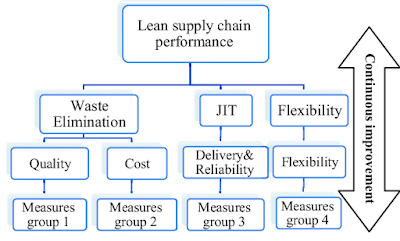
While the standards of typical supply chain management are known to most business owners, a new wave of lean supply chain management is becoming more popular for a variety of reasons . LEAN SUPPLY CHAIN DEFINITION Understanding lean supply chain definition starts with what effective supply chain management hopes to accomplish. In general, what is lean supply chain starts with operating on the same principles of efficiency, but emphasizes overall quality. This means a reduction of defective goods to zero, lowering waste, and increasing efficiency as a result. The idea behind lean supply chain management is to emphasize a lower number of returns by customers so that every product that is sold is kept. By reducing quality control issues and having to handle customers with their returns, lean supply chain management reduces overall expenses. CHARACTERISTICS OF LEAN SUPPLY CHAIN The characteristics of lean supply chain management start with the products themselves. An examination of why de...

The Best books of Supply Chain Management & Logistics

Image
Supply Chain Management strategy planning and operation"  by "Sunil Chopra, Peter Meindl, and D.V. Kalra". In NITIE (the mecca of supply chain) this book is considered as Bible of supply chain and really helps to understand the concept of the supply chain, strategy framework, planning and operational decisions within Supply chain.   Best books of Supply Chain Management & Logistics Essentials of Supply Chain Management by Michael H. Hugos Logistics and Supply Chain Management by Martin Christopher Designing and Managing the Supply Chain by David Simchi-Levi, Philip Kaminsky and Edith Simchi-Levi Purchasing and Supply Chain Management by Robert Monczka, Robert Handfield, Larry Giunipero and James Patterson Logistics Management and Strategy: Competing through the Supply Chainby Alan Harrison and Remko Van Hoek Manufacturing Planning and Control for Supply Chain Management by F. Robert Jacobs, William Berry, D. C...

Cargo Insurance Certificate

Image
What is Cargo Insurance? A document indicating the type and amount of  insurance coverage  in force on a particular  shipment . Used to assure the  consignee  that insurance is provided to cover loss of or damage to the  cargo  while in transit. In some cases a  shipper  may issue a document that certified that a  shipment  has been  insured  under a given open policy, and that the certificate represents and takes the place of such open policy, the provisions of which are controlling.  Because of the objections that an instrument of this kind did not constitute a “policy” within the requirement of letters of credit, it has become the practice to use a  special marine policy . A  special marine policy  makes no difference to an open policy and stands on its own feet as an obligation of the underwriting company. Also called  insurance certificate  and special  cargo  policy. ...

How to Calculate Safety Stock?

Image
How to Calculate Safety Stock ? Safety stock, or buffer stock, is a term that is used to describe the amount of inventory or stock beyond pending orders or average demand that should be kept on hand to reduce the chance of a temporary shortfall of materials, or stockout. Stockout can lead to lost sales and lost customers. Safety stock is helpful in dealing with sudden upswings in demand or for making sure there are enough raw materials and supplies on hand to keep production going while waiting for the next scheduled delivery of materials from a supplier. Method 1: Determining Safety Stock from Demand Look to historic demand and demand variability to determine how to avoid stockouts. The following calculations will predict the stock necessary to achieve a certain cycle service level - i.e. the percentage of supply cycles that will result in a stockout. Method 2: Determine average demand Average demand is the total quantity of a material or good required each day over a fixed ...

Retail Supply Chain & Industry 4.0

Image
Retail Supply Chain & Industry 4.0 It’s to be expected that retail offer chains within the next ten to fifteen years are going to be hotbeds of disruption. The net and e-commerce have started a revolutionary method that’s gone approach on the far side adding some additional sales and provide the channel for shoppers. In fact, the business of meeting retail demand could be added simply mapped to a matrix than a clearly outlined, end-to-end chain. Retailers and their suppliers should initiate to adapt, which implies rethinking relationships, collaborating in a very important approach, learning to harness the Omni-channel construct, and driving technology development in addition as investing what’s on the market. Retailers ought to think about implementing these 5 initiatives into supply chain: Incentivize with free shipping  Free shipping continues to be the highest driver of e-commerce, with nearly ninety % of customers news that it might build them look additi...

Block Chain Technology & Supply Chain

Image
What is blockchain? The blockchain is a digital ledger that keeps a record of all transaction taking place on a peer to peer network.All information transferred via blockchain is encrypted and every occurrence recorded meaning it can not be altered.  It is decentralized so there is no need for any central certifying authority.It can be used for much more than the currency, contracts, records and other kinds of data can be shared.Encrypted information can be shared across multiple providers without risk of a privacy breach.  Blockchains are a technology of tomorrow, not today A combination of new technologies artificial intelligence, big data, machine learning, the internet of things, mobile money, digital identity and, most importantly, 3D printing is poised to seriously disrupt these underlying processes. They'll make manufacturing more responsive and customizable to customer's orders in effect, turning  supply  chains into  demand  chain...