Posts

Showing posts with the label Supply Chain

Top 5 Logistics Interview Questions & Answers
Image
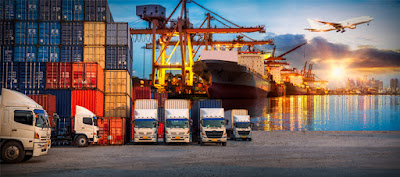
"Amateurs talk about strategy. Professionals discuss logistics." Every company uses logistics even though full-time logistics managers may not be employed. The work of a logistician begins with bringing in the supplies and raw materials necessary for a business or organization to operate. Inbound logistics are then used in conjunction with outbound logistics to distribute products or services where they are in demand. If you are thinking about a career change, the field of logistics has much to offer. 1. What are the activities performed at the operational level in logistics? Various activities at the operational level including • Goods receipt and checking • Bulk storage • Order picking • Stock replenishment • Order marshaling • Load Scheduling • Returns • Availability of Personnel • Update of stock • Completion of documentation 2. What does a bill of lading include? A bill of lading includes the following details • Name and complete address o...
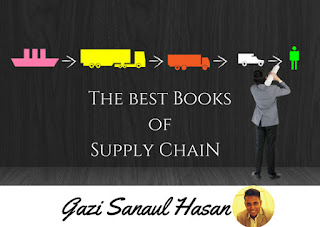
The Best books of Supply Chain Management & Logistics

Image
Supply Chain Management strategy planning and operation"  by "Sunil Chopra, Peter Meindl, and D.V. Kalra". In NITIE (the mecca of supply chain) this book is considered as Bible of supply chain and really helps to understand the concept of the supply chain, strategy framework, planning and operational decisions within Supply chain.   Best books of Supply Chain Management & Logistics Essentials of Supply Chain Management by Michael H. Hugos Logistics and Supply Chain Management by Martin Christopher Designing and Managing the Supply Chain by David Simchi-Levi, Philip Kaminsky and Edith Simchi-Levi Purchasing and Supply Chain Management by Robert Monczka, Robert Handfield, Larry Giunipero and James Patterson Logistics Management and Strategy: Competing through the Supply Chainby Alan Harrison and Remko Van Hoek Manufacturing Planning and Control for Supply Chain Management by F. Robert Jacobs, William Berry, D. C...

2 Best Practices for Inventory Management for Warehouses

Image
Inventory management is a complex process, particularly for larger organizations, but the basics are essentially the same regardless of the organization's size or type. In inventory management, goods are delivered to the receiving area of a warehouse in the form of raw materials or components and are put into stock areas or shelves. Compared to larger organizations with more physical space, in smaller companies, the goods may go directly to the stock area instead of a receiving location, and if the business is a wholesale distributor the goods may be finished products rather than raw materials or components. The goods are then pulled from the stock areas and moved to production facilities where they are made into finished goods. The finished goods may be returned to stock areas where they are held prior to shipment, or they may be shipped directly to customers. Track the bestsellers or the high sellers   An advantage of optimizing your inventory management for warehouses is ...

Retail Supply Chain & Industry 4.0

Image
Retail Supply Chain & Industry 4.0 It’s to be expected that retail offer chains within the next ten to fifteen years are going to be hotbeds of disruption. The net and e-commerce have started a revolutionary method that’s gone approach on the far side adding some additional sales and provide the channel for shoppers. In fact, the business of meeting retail demand could be added simply mapped to a matrix than a clearly outlined, end-to-end chain. Retailers and their suppliers should initiate to adapt, which implies rethinking relationships, collaborating in a very important approach, learning to harness the Omni-channel construct, and driving technology development in addition as investing what’s on the market. Retailers ought to think about implementing these 5 initiatives into supply chain: Incentivize with free shipping  Free shipping continues to be the highest driver of e-commerce, with nearly ninety % of customers news that it might build them look additi...

Block Chain Technology & Supply Chain

Image
What is blockchain? The blockchain is a digital ledger that keeps a record of all transaction taking place on a peer to peer network.All information transferred via blockchain is encrypted and every occurrence recorded meaning it can not be altered.  It is decentralized so there is no need for any central certifying authority.It can be used for much more than the currency, contracts, records and other kinds of data can be shared.Encrypted information can be shared across multiple providers without risk of a privacy breach.  Blockchains are a technology of tomorrow, not today A combination of new technologies artificial intelligence, big data, machine learning, the internet of things, mobile money, digital identity and, most importantly, 3D printing is poised to seriously disrupt these underlying processes. They'll make manufacturing more responsive and customizable to customer's orders in effect, turning  supply  chains into  demand  chain...
Image
9 Tips on How to Choose a Freight Forwarder 1. Is the freight forwarder’s company big enough to handle your global business? How many service contracts do they have? If it is important your goods are shipped with the first sailing vessel then you should work with forwarders who have various carrier contracts. This is also very important in peak season when space becomes a problem. If your forwar der has more than one carrier option then the chance of your cargo getting on board will be higher. Your forwarder can always find an alternate option if they have various carrier contracts. 2. Can the freight forwarder handle the product you want to ship or do they specialized in certain commodities? Make sure the freight forwarder has some knowledge of your product. 3. Does the freight forwarder have a good network of global agents at origin/destination ports? A good network of overseas agents ensures a smooth information flow which helps you to know where your product is and help you ...
Image
3 types of logistics services There are three types of logistics services 1. Freight forwarding service: This includes only a single service -freight forwarding 2. Value-added logistics services: They consist of service elements relating to order processing, customer-specific label printing, fleet management, letter-of-credit compliance and negotiation, and warehousing and inventory management. 3. Technology-enabled logistics services: They are concerned with service elements such as information management, tracking and tracing of shipments, Web-based linkage, receiving/sending shipment notices, and receiving/sending advanced shipping notices through EDI. On the basis of the above-mentioned three logistics service categories, they classified logistics service providers into four general types 1. Traditional freight forwarders: They only focus on operations efficiency in freight consolidation services. Example: taking a number of small shipments and combine them into a single larger...