Posts

Showing posts with the label Supply Chain in Garments Sector

PGD in Supply Chain in Bangladesh
Image
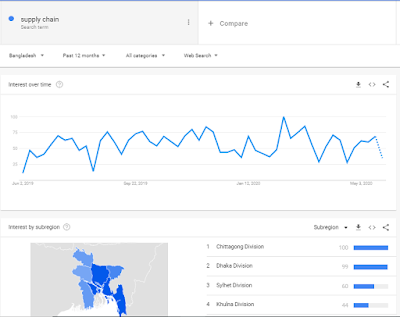
PGD in Supply Chain in Bangladesh  Supply chain courses are the hyped courses in Bangladesh now. So many institutions are trying to provide the supply chain courses to cover a large number of graduates. Trend analysis shows that in Bangladesh within the 12 months the search supply chain was dramatically higher. It's top in the city of trade Chittagong. Let's have a look at the following image.   Today we will share some institution names who conduct PGD courses in Supply Chain Management in Bangladesh. They are 1. Mind Mapper Bangladesh 2.  DCCI Bangladesh  3. BIMS Bangladesh   4.  Career Hub BD 5. BIHRM 6. BISCM 7.  ABP These institutions are suggested by different professionals in our group Supply Chain Management Students of Bangladesh . So if you have any queries, please click the link and contact them for the course details. Don't forget to join our Facebook Group.  Gazi Sanaul Hasan  

Top 5 Logistics Interview Questions & Answers

Image
"Amateurs talk about strategy. Professionals discuss logistics." Every company uses logistics even though full-time logistics managers may not be employed. The work of a logistician begins with bringing in the supplies and raw materials necessary for a business or organization to operate. Inbound logistics are then used in conjunction with outbound logistics to distribute products or services where they are in demand. If you are thinking about a career change, the field of logistics has much to offer. 1. What are the activities performed at the operational level in logistics? Various activities at the operational level including • Goods receipt and checking • Bulk storage • Order picking • Stock replenishment • Order marshaling • Load Scheduling • Returns • Availability of Personnel • Update of stock • Completion of documentation 2. What does a bill of lading include? A bill of lading includes the following details • Name and complete address o...

The 80/20 Rule

Image
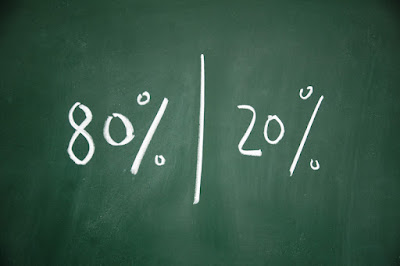
How to Reduce Safety Stock Using the 80/20 Rule The 80/20 rule is often used in parts inventory management to identify the 20% of inventory that produces 80% of the profits.A variant of this rule, called ABC analysis, is commonly used to split inventory into three parts according to their profitability. This allows the organization to focus efforts and money on the inventory items that count the most. While this is a good way to put the 80/20 rule to use, there are other equally useful applications of this powerful principle. Suppose the organization already used the 80/20 rule to identify the most profitable inventory items and have eliminated or reduced the least profitable ones. While this is a significant improvement in cutting down inventory costs, company can go further by applying the 80/20 rule to your safety stock. So how can we use the 80/20 rule to minimize uncertainties?  Let’s look at supplier unreliability. Unreliable suppliers are the suppliers w...
Image
Warehouse Vs. Warehousing  Warehouse is a warehouse is a commercial building that’s used to store goods, they’re mainly used by manufacturers, importers, exporters, wholesalers, and transport businesses, to name a few. Warehouses are used for storage, and storage only. They’re usually large plain buildings in industrial areas. They have loading docks to load and unload goods, but that’s usually the extent of the activity that goes on in a warehouse. They can be designed to receive goods directly from railways, airports, or seaports, and are usually equipped with cranes and forklifts for moving and organizing goods. Some warehouses are temperature controlled, making them well-suited for storing groceries, other perishables, and other materials including raw materials, packing foods, spare parts, and more. While warehouses can be useful to some, not all retailers use them since they’re better suited for those searching for a more long-term storage option. A warehou...

The Best books of Supply Chain Management & Logistics

Image
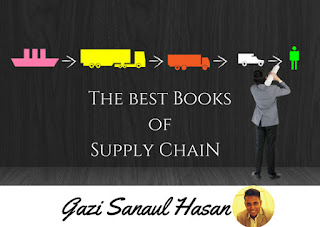
Supply Chain Management strategy planning and operation"  by "Sunil Chopra, Peter Meindl, and D.V. Kalra". In NITIE (the mecca of supply chain) this book is considered as Bible of supply chain and really helps to understand the concept of the supply chain, strategy framework, planning and operational decisions within Supply chain.   Best books of Supply Chain Management & Logistics Essentials of Supply Chain Management by Michael H. Hugos Logistics and Supply Chain Management by Martin Christopher Designing and Managing the Supply Chain by David Simchi-Levi, Philip Kaminsky and Edith Simchi-Levi Purchasing and Supply Chain Management by Robert Monczka, Robert Handfield, Larry Giunipero and James Patterson Logistics Management and Strategy: Competing through the Supply Chainby Alan Harrison and Remko Van Hoek Manufacturing Planning and Control for Supply Chain Management by F. Robert Jacobs, William Berry, D. C...

Cargo Insurance Certificate

Image
What is Cargo Insurance? A document indicating the type and amount of  insurance coverage  in force on a particular  shipment . Used to assure the  consignee  that insurance is provided to cover loss of or damage to the  cargo  while in transit. In some cases a  shipper  may issue a document that certified that a  shipment  has been  insured  under a given open policy, and that the certificate represents and takes the place of such open policy, the provisions of which are controlling.  Because of the objections that an instrument of this kind did not constitute a “policy” within the requirement of letters of credit, it has become the practice to use a  special marine policy . A  special marine policy  makes no difference to an open policy and stands on its own feet as an obligation of the underwriting company. Also called  insurance certificate  and special  cargo  policy. ...

Supply Chain Risk Management

Image
Supply chain risk management (SCRM) is the coordinated efforts of an organization to help identify, monitor, detect and mitigate threats to supply chain  continuity and profitability. Threats to the supply chain include cost volatility, material shortages, supplier financial issues and failures and natural and manmade disasters.  Upstream of an organization are the suppliers who create goods and services used in a company’s own operations. These include raw components or materials that flow into direct manufacturing as raw materials. There are also indirect products and services that facilitate the company’s actual operations. The downstream supply chain efficiently distributes a company’s products or services to its customers. All contracted suppliers, both upstream and downstream, must be proactively managed to minimize financial, confidentiality, operational, reputational and legal risks. Ideally, if the risk is properly managed, nothing occurs that has a...

2 Best Practices for Inventory Management for Warehouses

Image
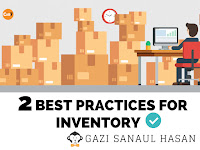
Inventory management is a complex process, particularly for larger organizations, but the basics are essentially the same regardless of the organization's size or type. In inventory management, goods are delivered to the receiving area of a warehouse in the form of raw materials or components and are put into stock areas or shelves. Compared to larger organizations with more physical space, in smaller companies, the goods may go directly to the stock area instead of a receiving location, and if the business is a wholesale distributor the goods may be finished products rather than raw materials or components. The goods are then pulled from the stock areas and moved to production facilities where they are made into finished goods. The finished goods may be returned to stock areas where they are held prior to shipment, or they may be shipped directly to customers. Track the bestsellers or the high sellers   An advantage of optimizing your inventory management for warehouses is ...

How to Calculate Safety Stock?

Image
How to Calculate Safety Stock ? Safety stock, or buffer stock, is a term that is used to describe the amount of inventory or stock beyond pending orders or average demand that should be kept on hand to reduce the chance of a temporary shortfall of materials, or stockout. Stockout can lead to lost sales and lost customers. Safety stock is helpful in dealing with sudden upswings in demand or for making sure there are enough raw materials and supplies on hand to keep production going while waiting for the next scheduled delivery of materials from a supplier. Method 1: Determining Safety Stock from Demand Look to historic demand and demand variability to determine how to avoid stockouts. The following calculations will predict the stock necessary to achieve a certain cycle service level - i.e. the percentage of supply cycles that will result in a stockout. Method 2: Determine average demand Average demand is the total quantity of a material or good required each day over a fixed ...

Retail Supply Chain & Industry 4.0

Image
Retail Supply Chain & Industry 4.0 It’s to be expected that retail offer chains within the next ten to fifteen years are going to be hotbeds of disruption. The net and e-commerce have started a revolutionary method that’s gone approach on the far side adding some additional sales and provide the channel for shoppers. In fact, the business of meeting retail demand could be added simply mapped to a matrix than a clearly outlined, end-to-end chain. Retailers and their suppliers should initiate to adapt, which implies rethinking relationships, collaborating in a very important approach, learning to harness the Omni-channel construct, and driving technology development in addition as investing what’s on the market. Retailers ought to think about implementing these 5 initiatives into supply chain: Incentivize with free shipping  Free shipping continues to be the highest driver of e-commerce, with nearly ninety % of customers news that it might build them look additi...

Letter of credit and types of LC

Image
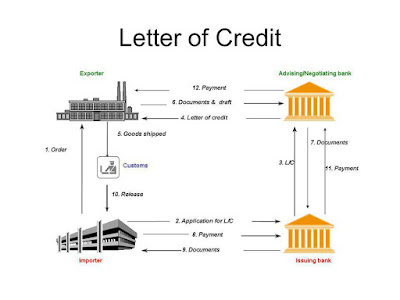
Letter of credit A commercial letter of credit or documentary credit maybe defined as an instrument,usually issued by a bank at the request and for the account of its client which indicates that the bank agrees to pay to the named beneficiary a sum of money upon the presentation of certain documents. The use of letter credit for financing export shipments has long been popular with exporters.A l etter of credit is only as good as the bank that issues it and if confirmed the bank that confirms it. Types of Letter of credit   1.Revocable and irrevocable A revocable letter of credit can be changed or cancelled by the bank that issued it at any time and for any reason. An irrevocable letter of credit cannot be changed or cancelled unless everyone involved agrees. Irrevocable letters of credit provide more security than revocable ones. 2.Confirmed and unconfirmed  When the Letter of credit is guaranteed by adding payment confirmation by the advis...
Image
In today’s technical era, where human putting their efforts to discover the world beyond the imagination, textile field  playing their significant role to improve the technologies and as a key source to describe the persona of every human being, yes we are talking about apparel industry . Apparel industries are the sector where we build our comforts, in so many different ways. But how it works, the apparel industry is a making a garment to wear as comfort to look better to appear. Everybody knows to industry of garment and textile or apparel industry is that truly are to whole world economy work as depend on apparel and his manufacturer   apparel industry making a garment.  Supply Chain Stages: The supply chain stage are as follows- Raw material   supplier Manufacturer Wholesaler/distributor Retailer Customer   Tools of Supply Chain System: Chain management system working as many terms and depending tools Location Transportation and logist...